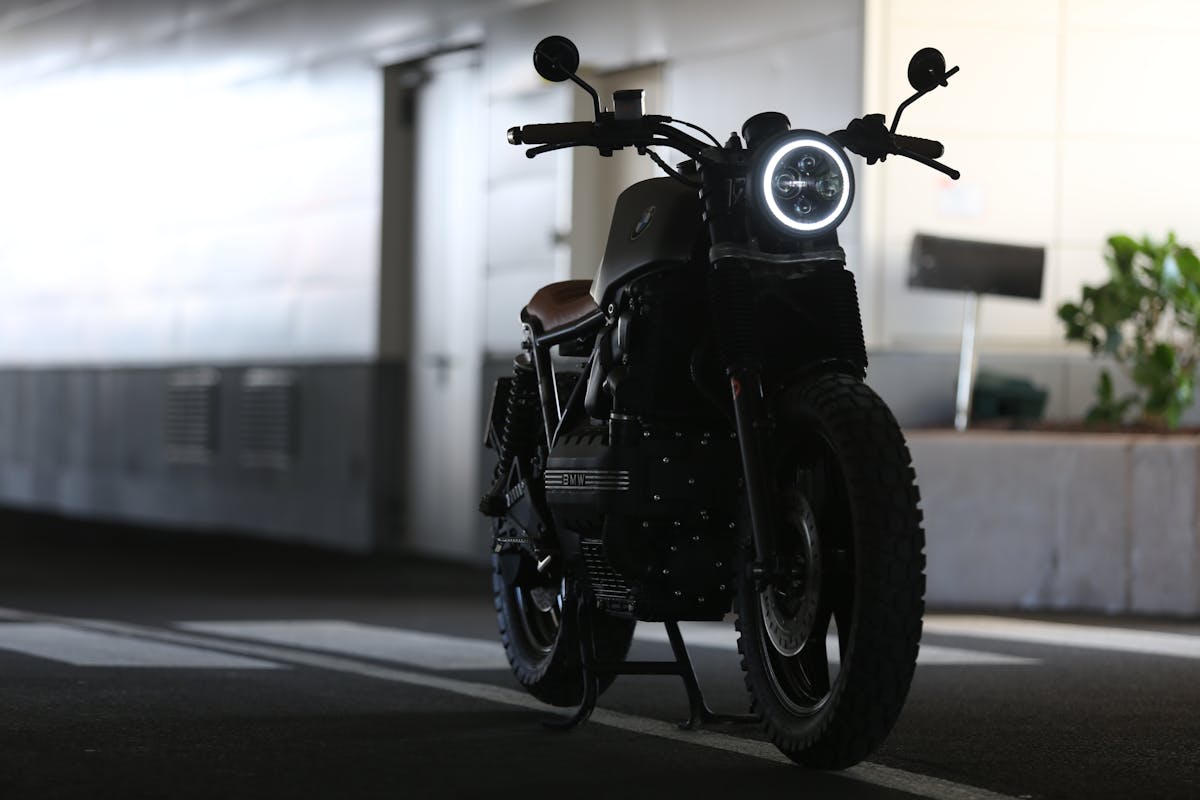
It's April 4th, 2026, and if you're in Ohio right now, you know exactly what that means: the temperatures have finally crept back into the 60s and 70s, the salt has been washed off the roads, and that motorcycle sitting in your garage has been staring at you for the last four months waiting for this exact moment. Spring riding season in Ohio is officially here.
But before you fire it up and head for SR-73 or Hargus Creek Road, spend 30–45 minutes going through this checklist. After a winter in storage — even if you prepped it properly — there are several things that can go wrong quietly while a bike sits. Catching them now in your driveway is a lot better than catching them 40 miles from home.
At CCM, our factory-certified service department sees bikes every spring that sat over winter and came back with flat-spotted tires, dead batteries, cracked brake lines, and gummy carburetors. A quick inspection up front saves money, saves rides, and could save your life. Here's what to check.
If your bike has been in storage for more than 4 months, consider scheduling a full spring service at CCM before your first ride. Our factory-certified technicians will go through everything on this list — and more — so you can hit the road with complete confidence. Schedule service here →
1. Tires — Pressure, Condition & Age
Tires are your first and most important check. Motorcycles sit on two contact patches roughly the size of your palm, so any compromise in tire condition translates directly into handling, braking, and stability at speed.
Pressure: After sitting all winter, most tires will lose 3–5 PSI or more due to temperature fluctuation and natural permeation. Cold tires will always read lower — check pressure when the tires are cold (haven't rolled more than a mile). Use a quality digital gauge and inflate to the manufacturer spec found in your owner's manual or on the swingarm sticker, not the max pressure molded into the tire sidewall.
Flat spots: If your motorcycle sat on the same spot without a paddock stand, the contact patch can develop a slight flat spot. You'll feel a rhythmic thump or wobble at lower speeds. Minor flat spots often work themselves out after a few miles of gentle riding; severe ones don't, and they need new tires.
Cracking and sidewall condition: Look closely at the tread and sidewalls for dry rot — hairline cracks in the rubber that signal the tire has aged past its safe lifespan. Motorcycle tires have a shelf life regardless of tread depth. If your tires are more than 5 years old (check the DOT date code on the sidewall — the last 4 digits show week and year of manufacture), replace them before the season even if they look fine. Old rubber loses elasticity and grip.
Tread depth: Ohio law requires at least 2/32" of tread depth, but for safety, we recommend replacing tires at 3/32" or sooner on a motorcycle. Use a tread depth gauge or the built-in wear indicators molded into the grooves.
2. Brakes — Pads, Fluid & Lines
Brakes save your life. Give them proper attention.
Brake fluid: Brake fluid is hygroscopic — it absorbs moisture from the air over time. After a winter of sitting, the fluid in your system may have absorbed enough water to lower its boiling point significantly, which can cause brake fade under hard use. Look at the fluid level in both reservoirs (front master cylinder and rear) — it should be between the MIN and MAX lines. Check the color too: fresh fluid is clear to pale yellow. If yours looks dark brown, it's time to flush. Most manufacturers recommend replacing brake fluid every 1–2 years.
Brake pads: Look through the caliper to check pad thickness. If you're down to 2mm or less of friction material, replace them now before the season starts. New pads are cheap compared to a rotor or, worse, the consequences of brake failure on the road.
Brake lines: Inspect the rubber brake hoses for cracks, bulges, or any signs of deterioration — especially where the hoses meet the metal fittings. Squeeze the lever and look for any seepage or weeping at the connections. If you find anything suspicious, don't ride until it's fixed.
Brake feel: With the bike on its center stand or paddock stand, squeeze the front brake lever and check for firmness. A spongy lever often indicates air in the system or low fluid. Test the rear brake pedal for the same. Both should feel firm and engage progressively.
3. Engine Oil & Coolant
Oil: If you changed your oil before storage (which you should have — used oil is acidic and will corrode engine internals over winter), you're in good shape to start the season. Check the level on the sight glass or dipstick and verify it's within spec. If you didn't change it before storage, change it now before your first ride. Don't skip this step.
Oil for wet-clutch bikes: Make sure you're using motorcycle-specific oil (JASO MA or MA2 rated) if your bike has a wet clutch. Car oil contains friction modifiers that will cause clutch slippage on most motorcycles. This is a common mistake riders make when buying oil at a general auto parts store.
Coolant (liquid-cooled bikes): Check the coolant level in the expansion reservoir — it should be between the MIN and MAX lines. If you're low, top up with the correct pre-mixed coolant (don't use straight water, and make sure the coolant type matches what's already in the system). Inspect the radiator fins for any debris — leaves, mud, or bent fins — that could impede airflow. Straighten bent fins gently with a small flat tool.
4. Battery
Battery failure is the single most common reason bikes don't start in spring. Even with a battery tender connected all winter, batteries degrade over time and may not hold a charge the way they did last fall.
Load test: Checking voltage with a multimeter only tells you the resting voltage — a battery can show 12.6V and still fail under the load of starting. If your battery is more than 3–4 years old, have it load-tested at a shop (we can do this at CCM). A battery that won't hold load under cranking needs to be replaced before it leaves you stranded.
Connections: Check both terminals for corrosion — that white or green powdery buildup. Clean terminals with a wire brush and a baking soda/water solution, then coat with dielectric grease. Make sure the battery is secure in its tray and the terminals are tight.
If you didn't use a tender: Charge the battery fully with a smart charger before attempting to start the bike. Repeated attempts to start a deeply discharged battery will kill it faster and can damage the charging system over time.
5. Chain & Drive System
For chain-drive motorcycles — which covers most sport bikes, naked bikes, dirt bikes, and dual-sports — the chain and sprockets need inspection every spring.
Chain tension: Check the sag specification in your owner's manual (typically 25–35mm of free play for street bikes, tighter for dirt bikes). Adjust at the rear axle adjusters if needed, keeping both sides even to maintain wheel alignment.
Lubrication: After sitting all winter, your chain may be dry or have old, gummy lubricant on it. Clean the chain with a dedicated chain cleaner and a chain brush, let it dry, then apply fresh chain lube. For O-ring and X-ring chains, use a lube specifically designed not to damage the seals.
Wear: Lift the chain at the rear sprocket — if it lifts more than about 1/3 of a tooth height off the sprocket, the chain is stretched and needs replacement. Also inspect the sprocket teeth: shark-fin-shaped or hooked teeth mean the sprocket is worn out. Chain and sprockets wear together and should almost always be replaced as a set.
Belt and shaft drive: Check belt-drive bikes for cracking and proper tension per the manual. Shaft-drive bikes need the shaft oil level checked — refer to your manual for the fill plug location and the correct fluid type.
6. Throttle, Clutch & Controls
Throttle: With the engine off, roll the throttle fully open and release it — it should snap back to closed instantly with no sticking or hanging. Check this with the handlebars turned fully left and right, since some handlebar positions can pinch cables. A sticking throttle is dangerous and must be fixed before riding.
Cable condition: Inspect throttle, choke, and clutch cables along their entire length for kinks, fraying, or housing cracks. Lubricate cables with cable lubricant using a cable luber tool. If a cable is frayed or kinked, replace it.
Clutch: For cable clutches, check free play at the lever (typically 2–3mm) and adjust at the perch adjuster or the lower adjuster at the engine. Hydraulic clutches: check the reservoir fluid level and condition, same as brake fluid.
Levers and foot controls: Make sure levers aren't bent from any winter storage mishaps, brake and shift pedals are in their correct positions, and all pivot points move freely. A tiny drop of oil on lever pivots goes a long way.
7. Lights, Electrics & Horn
This is quick but important — both for safety and because law enforcement does write equipment violation tickets in Ohio.
- Headlight — both low and high beam
- Tail light and brake light — test with both the front lever and rear pedal
- Turn signals — all four, front and rear
- Instrument cluster — speedometer, tachometer, warning lights all illuminate on startup
- Horn — yes, Ohio law requires a functioning horn
If any bulbs are out, replace them before riding. LED bulb replacements for most bikes are inexpensive and available through our parts department at CCM. While you're at it, clean your headlight lens — a yellowed or oxidized lens dramatically reduces output.
8. Fuel System
How you handle this depends on whether you ran the bike dry or left fuel in the tank over winter.
If you used fuel stabilizer and left fuel in the tank: You're in pretty good shape. Give the bike a sniff — if the fuel smells sharp or like varnish, it has gone stale and should be drained and replaced with fresh fuel. Fill up with fresh 87 or 91 octane (whatever your bike requires) from a busy station to dilute any degraded fuel in the tank.
If you didn't use stabilizer: Drain the old fuel completely. Old gasoline forms varnish deposits that can clog fuel injectors and carburetor jets. On fuel-injected bikes, you may need to run the injector cleaning cycle or have a shop clean them. On carbureted bikes, you may need to remove and clean the carbs — this is a job we handle regularly in our service department if you'd rather not DIY it.
Fuel lines and petcock: Inspect the rubber fuel lines for cracks or softness, particularly at the clamps. On bikes with a vacuum-operated petcock, test it in PRI (prime) position and verify fuel flows freely to the carb. Replace cracked lines before riding.
9. Suspension & Steering
Fork seals: Look at the fork legs just above the lower leg — you're checking for oil streaks or wet spots that indicate a leaking fork seal. A leaking seal will contaminate the front brake rotor and reduce braking performance. Seal replacement is a moderately involved job; if you see oil on the fork legs, schedule a service appointment.
Steering head bearings: With the bike on a stand and the front wheel off the ground, slowly turn the bars lock-to-lock. It should turn smoothly and feel the same throughout the range. If you feel notches, stiffness, or binding (especially right at center), the steering head bearings need to be repacked or replaced. This is another common spring issue on bikes that have been sitting.
Suspension action: Push down on the front forks — they should compress smoothly and return without any clunking or binding. Same for the rear shock. Clunks or excessive bouncing point to worn suspension components.
10. Walk-Around & First Start
Before you start the bike, do a slow visual walk-around:
- No fluid puddles under the bike
- No critter nests in the airbox or exhaust (seriously — mice love warm bikes in winter storage)
- Exhaust header bolts tight, no signs of exhaust leaks (black soot around header flanges)
- Side stand, center stand, and footpegs all fold and lock properly
- Mirrors in position and tight
- No loose bodywork or fairings
Now start it. Let it warm up fully before you ride — don't just fire it and go. Cold engine oil doesn't flow and protect as well as warm oil. Let the temperature gauge reach operating temperature and idle stabilize. Listen for any unusual noises: ticking, rattling, or knocking that wasn't there last fall.
Your first ride back should be a short, low-stress shakedown — ideally in a neighborhood or back road with light traffic. You want to check all the controls, feel the brakes bed in, and make sure everything you inspected in the driveway is actually working as expected before you're doing 65 mph on the highway. Build back up to sport riding gradually, especially if you've been off the bike for several months. Your muscle memory comes back fast, but it takes a few rides.
Don't Want to Do It Yourself? CCM Has You Covered.
If any of this feels like a lot, or if you found something that needs professional attention, our factory-certified service department at Clinton County Motorsports is ready for spring. We're seeing a surge of service appointments right now as Ohio riders bring their bikes out of storage, so if you want to get in before the wait gets long, book your spring service appointment now.
Our technicians are factory-trained by Yamaha, KTM, Kawasaki, Polaris, Can-Am, Husqvarna, Gas Gas, Triumph, and Suzuki — so no matter what you ride, it's in the right hands. We handle everything from basic spring tune-ups (oil change, filter, chain service, safety check) to full top-end rebuilds, tire mounting and balancing, suspension work, and brake system service.
We also stock a full line of OEM parts and accessories in-house. If your inspection turns up a worn tire, a leaking fork seal, or a cracked cable, we can likely get you the part the same day rather than ordering and waiting a week.
New Bikes for the 2026 Season
If this spring inspection told you it's time for a new machine — or if you just want to upgrade — we have fresh 2025 and 2026 inventory arriving now. The spring season is one of the best times to shop: manufacturer promotions are active, our selection is at its fullest, and our finance team can often get approvals done same-day so you're riding before the weekend.
We carry new and pre-owned motorcycles, dirt bikes, ATVs, UTVs, and side-by-sides from Yamaha, Kawasaki, KTM, Polaris, Can-Am, Triumph, Suzuki, Husqvarna, Gas Gas, and Slingshot. Whether you're looking for your first street bike, a serious enduro machine, a family side-by-side, or an adventure motorcycle for a cross-country trip, we have it in stock or can get it.
Stop in at 6002 U.S. 68 N in Wilmington, Tuesday through Friday 10am–6pm or Saturday 9am–3pm. Or give us a call at (937) 283-2220. We'll see you out there.
Ready to Ride in 2026?
Schedule your spring service, shop new inventory, or come browse the showroom — we're open Tue–Fri 10am–6pm & Sat 9am–3pm.